Feed: SAS Blogs.
Author: Robert Allison.
Poverty. It’s a bit difficult to define who lives in poverty – I guess it’s a relative thing, and depends on the standard of living of the people around you. Today we’re going to take a look at the child poverty rates in several ‘rich’ countries (such as the United States).
But first, here’s a picture my friend Jennifer took on one of her many international trips. Can you guess what country it’s in? And is this person living in poverty? On one hand, the house looks pretty rough – on the other hand, they have a house!
 While perusing the Internet, I came across the following graph on the washington.edu web site. There were several things I liked about the graph (it was an interesting topic, the bars were sorted, the axis starts at zero, the values were printed on the bars, it was easy to follow a bar to the country name, and it had subtle reference lines to help group the bars into 5% groups).
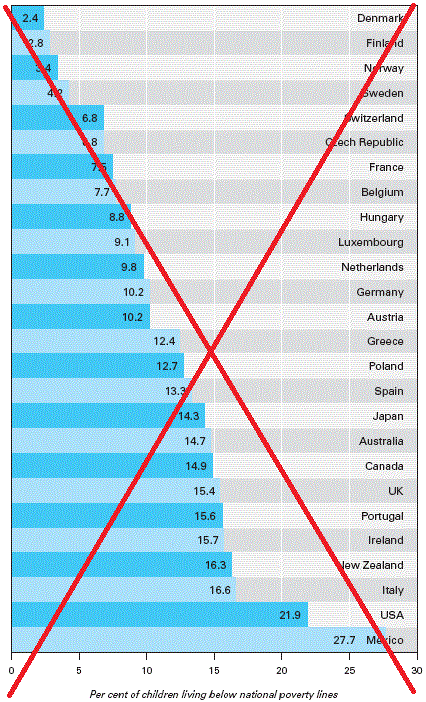
But, as with many graphs, I saw some room for improvement. Therefore I entered the data into a SAS dataset, and created my own version – very similar, but with some subtle changes:
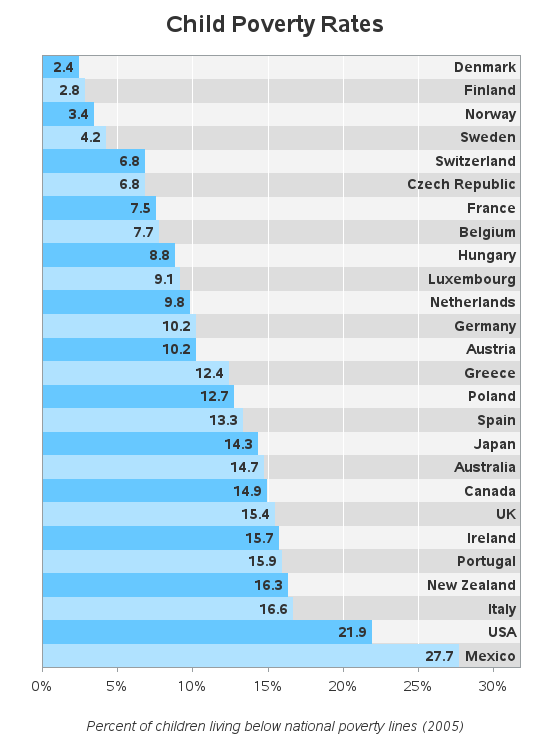
Compare the two graphs and see if you can identify the improvements. Then check the list below and see if you noticed them all!
- I added a title above the graph.
- I added the year to the footnote.
- I made my text a little larger, and easier to read (especially along the bottom axis and footnote).
- I add a slight offset space after the 30% axis tick mark, so there’s room to fit the ‘Mexico’ label without overlapping the bar.
- I used a percent format on the values along the bottom axis (now you don’t have to read the footnote to see that the values are in percent).
- And, if you click the graph to view the interactive version, each bar has mouse-over text showing the country name and value.
Were there any surprises in the graph? Does the graph make you ask any questions? (I’m curious how similar, or different, the “national poverty line” is, in each country.)